Baseline Script: A Minimalist Font for Modern Design
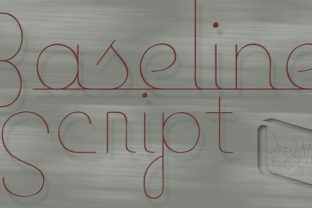
Baseline Script is a hand-drawn monoline font that stands out for its sleek, minimalist design and versatility in both digital and print media. With its ultra-thin strokes and aerodynamic feel, it offers a unique visual balance between elegance and simplicity. This font is particularly well-suited for designers looking to add a touch of sophistication without overwhelming the reader or viewer.
What Makes Baseline Script Distinct?
At first glance, Baseline Script might seem similar to other script fonts, but its defining feature is its monoline structure. Unlike traditional script fonts that vary in stroke width to create a more dynamic look, Baseline Script maintains a consistent line thickness throughout each character. This uniformity gives it a clean, modern aesthetic that feels both professional and approachable.
The font’s thinness contributes to its light, almost weightless appearance, which makes it ideal for use in contexts where readability and visual clarity are essential. Its default underlined style adds an extra layer of definition, making it particularly effective for headings and subheadings. The unlined version, on the other hand, is softer and more fluid, lending itself well to body text in longer passages.
One of the most notable aspects of Baseline Script is its ability to convey motion and speed. The font’s streamlined form and smooth curves give it an aerodynamic quality, making it a popular choice for branding related to performance, technology, and speed-oriented industries.
Comparing Baseline Script with Similar Fonts
When considering alternatives to Baseline Script, it's important to understand how it stacks up against other script and sans-serif fonts. For instance, compared to more ornate script fonts like Brush Script MT, Baseline Script offers a cleaner, more restrained look that doesn’t distract from the content it accompanies. It also avoids the heaviness of some serif fonts, which can make it feel outdated or too formal in certain contexts.
In comparison to minimalist sans-serif fonts like Helvetica Neue or Roboto, Baseline Script brings a handwritten warmth that sans-serif fonts typically lack. However, this also means it may not be as suitable for long-form text where legibility is paramount. While sans-serif fonts are often preferred for body copy due to their high readability, Baseline Script’s thinner lines and curved forms may require careful spacing and sizing to maintain clarity at smaller sizes.
Another point of comparison is with other monoline script fonts such as Montserrat or Open Sans. While these fonts share the minimalism of Baseline Script, they differ in their overall shape and character structure. Baseline Script’s emphasis on fluidity and motion sets it apart, making it a better fit for projects that aim to communicate speed, agility, or innovation.
Strengths and Tradeoffs of Using Baseline Script
Baseline Script has several strengths that make it a compelling option for designers and content creators. Its sleek, modern design is visually appealing and aligns well with contemporary design trends. The font’s thinness and consistency in stroke width help maintain a cohesive look across different elements of a design, whether it’s a website header, a poster, or a mobile app interface.
However, there are also tradeoffs to consider. Because of its thin lines, Baseline Script may not be the best choice for small text sizes or low-resolution displays, where the details could become less visible. Additionally, while the font is excellent for short bursts of text, such as headlines or call-to-action buttons, it may not be as effective for large blocks of body copy, where the lack of variation in stroke width could lead to visual fatigue.
Another consideration is the font’s availability. While Baseline Script is widely used in web design and graphic design software, it may not be available by default in all platforms or applications. Designers may need to download or purchase it separately, depending on their specific needs and tools.
Best-Fit Situations for Baseline Script
Baseline Script shines in situations where a clean, modern, and slightly artistic font is needed. It works particularly well for brand identities that want to project a sense of speed, agility, or innovation. For example, tech startups, sports brands, and automotive companies often use fonts like Baseline Script to reinforce their messaging around performance and efficiency.
In digital design, Baseline Script is commonly used for website headers, navigation menus, and button labels. Its underlined style makes it stand out without being too bold, ensuring that important information is easily noticeable. In print design, it can be used for magazine titles, editorial sections, and promotional materials where a touch of elegance is desired.
For body text, the unlined version of Baseline Script is more appropriate. It provides a softer, more readable experience compared to the underlined variant, making it suitable for articles, blog posts, and other long-form content. However, as mentioned earlier, it should be used with caution in very long passages, where the font’s characteristics may affect readability.
When to Choose Another Option
While Baseline Script is a versatile and stylish font, it may not always be the best choice. If your project requires high readability in long-form text, a more conventional sans-serif or serif font might be a better option. Similarly, if you’re working on a design that needs to convey a strong, bold message, a heavier or more decorative font could be more effective.
Additionally, if you're designing for a wide audience that includes older adults or individuals with visual impairments, it’s worth considering a font that is known for its accessibility and legibility. While Baseline Script is elegant, it may not be the most inclusive choice in all scenarios.
Finally, if you're using the font in a context that requires a more traditional or classic look, Baseline Script’s modern aesthetic may not align with your goals. In such cases, exploring other script or serif fonts that offer a more timeless appeal could be a better approach.
Real-World Examples and Practical Comparisons
To illustrate the effectiveness of Baseline Script, consider a scenario where a fitness brand wants to launch a new app. The brand’s identity revolves around speed, energy, and movement. By using Baseline Script for the app’s title and key features, the design reinforces the brand’s message through typography alone. The font’s sleek, aerodynamic look helps create a visual connection between the product and the concept of performance.
In contrast, if the same brand were targeting a more mature audience with a focus on health and wellness rather than speed, a more traditional serif font like Georgia or Times New Roman might be more appropriate. These fonts are known for their readability and classic appeal, which can be more comforting and trustworthy for older users.
Another example is a lifestyle blog that uses Baseline Script for its article titles and section headers. The font adds a touch of personality and creativity to the layout, making the content feel more engaging and visually interesting. However, for the body text, the blog switches to a more standard sans-serif font to ensure that readers can comfortably read through the entire article without eye strain.
These examples highlight how Baseline Script can be used effectively in various contexts, but also emphasize the importance of matching the font to the project’s goals and audience.